In the heart of the Bernese Oberland, a centuries-old castle finds new life as a six-room bed and breakfast.
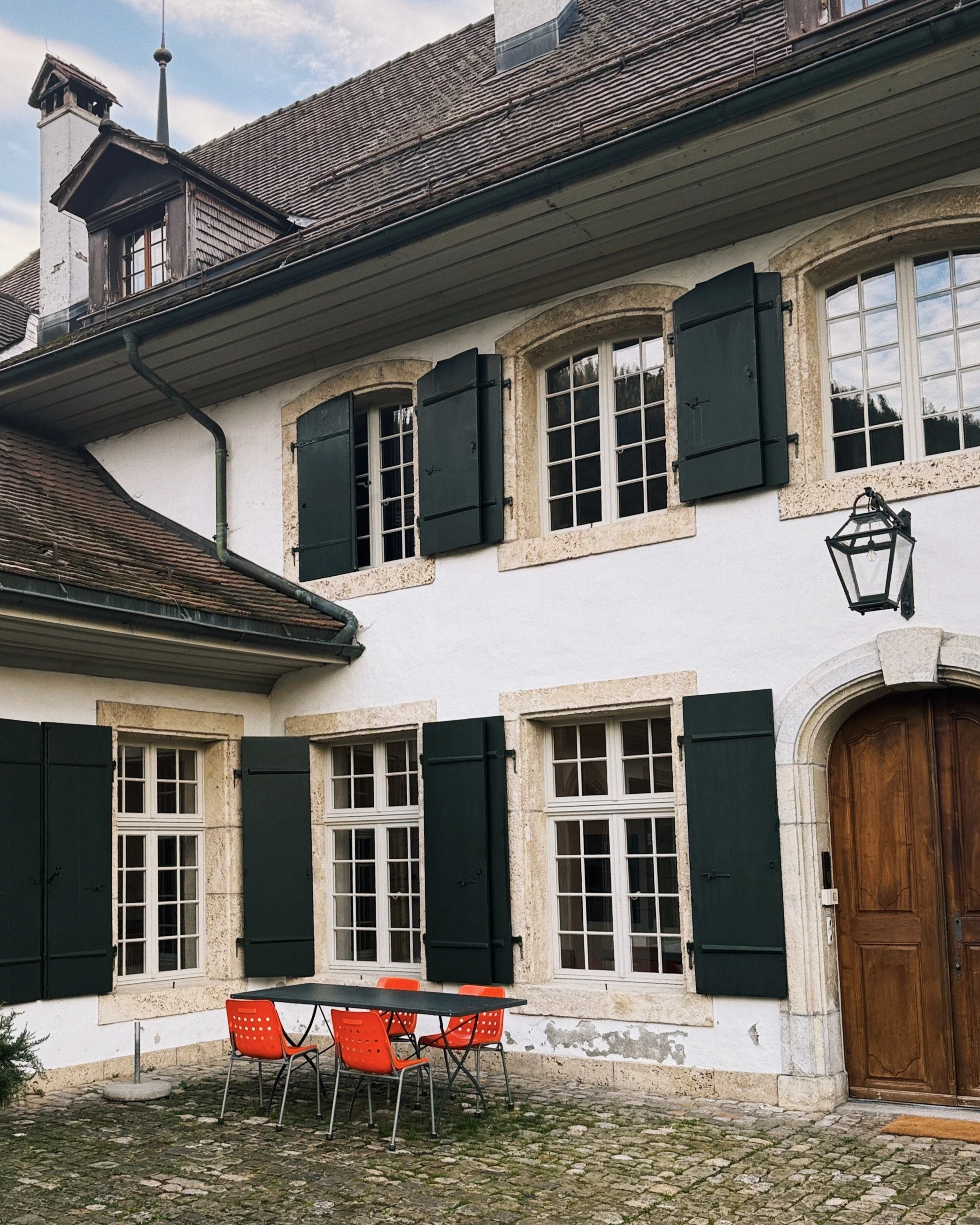
Arriving at Schloss Blankenburg on a sunny October afternoon, the first thing that strikes me is the colour. The green of the surrounding mountains, the warm tones of the autumn leaves and the bright orange chairs scattered across the courtyard. For a building with centuries of history, the atmosphere feels remarkably cheerful.Inside, the same character continues. Natural light fills the spacious rooms, where vintage furniture, contemporary lamps and colourful textiles sit alongside original wooden floors, traditional windows and beautifully preserved tiled stoves. Modern additions complement rather than compete with the castle's historic architecture.We're welcomed by Anne-Sophie Jaggi and Lukas Gasser, the couple behind Schloss Blankenburg's new chapter as a six-room bed and breakfast. From their collections of books, records and cassettes to furniture and objects gathered over the years, the castle offers an immediate glimpse into their personal tastes. Later that afternoon, I sit down with Anne-Sophie and Lukas to learn more about how the project came to life, their approach to hospitality and their plans for the castle's future.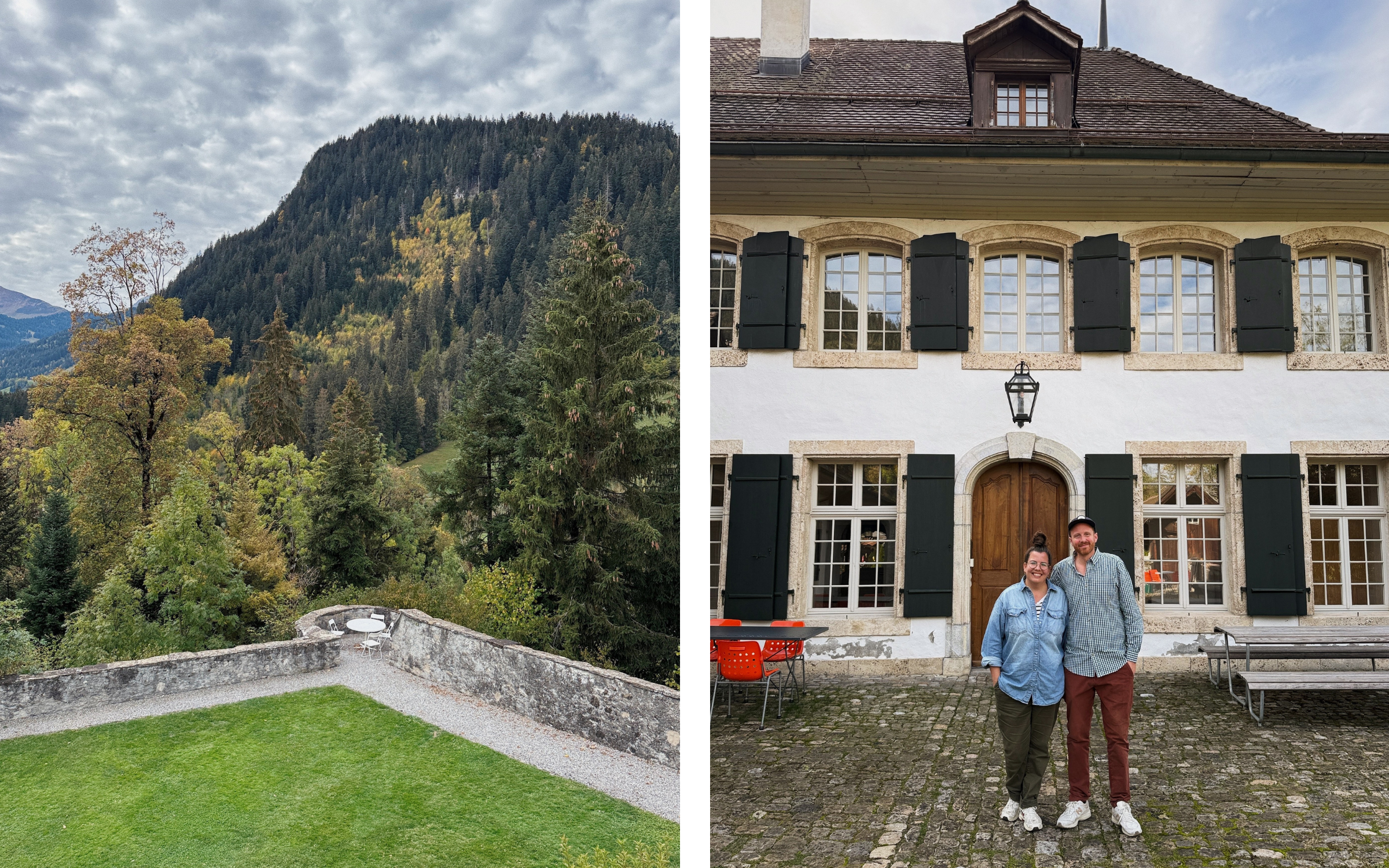
A Castle with a New Purpose
For generations, Schloss Blankenburg served as an administrative centre for the surrounding region. Until relatively recently, the building housed various public functions, including local government offices, a courtroom and even prison cells.

When the Canton of Bern began consolidating its administrative services, the castle gradually lost its original purpose. In 2012, a locally supported foundation acquired the property to preserve it and ensure that it remained connected to the region.

As maintaining the historic building became increasingly challenging, a generational change within the foundation's board opened the door to new ideas for its future. Today, Lukas serves as president of the foundation, with Anne-Sophie as vice-president, alongside a new generation of board members.

Both trained in hospitality, the couple had previously operated a restaurant with rooms in Gsteig, in the neighbouring Saanenland. After that experience, they spent several years considering different properties, hoping to find somewhere they could develop a project on their own terms.

Schloss Blankenburg offered a chance to put their professional experience into practice and develop an approach to hospitality that felt entirely their own.

The conversion into a bed and breakfast required surprisingly few structural changes. The castle had already been well maintained, and the main adaptations involved renovating the two bathrooms and meeting the requirements of operating a hospitality business within a protected historic property.

As Anne-Sophie and Lukas explain, the challenge lies in finding the right balance between use and preservation. Original painted surfaces, historic tiled stoves and other architectural details need particular care. The aim is to make the building accessible and economically sustainable without compromising the elements that make it special.

Rather than transforming the castle, they've found a way to give it a new purpose while working with what was already there.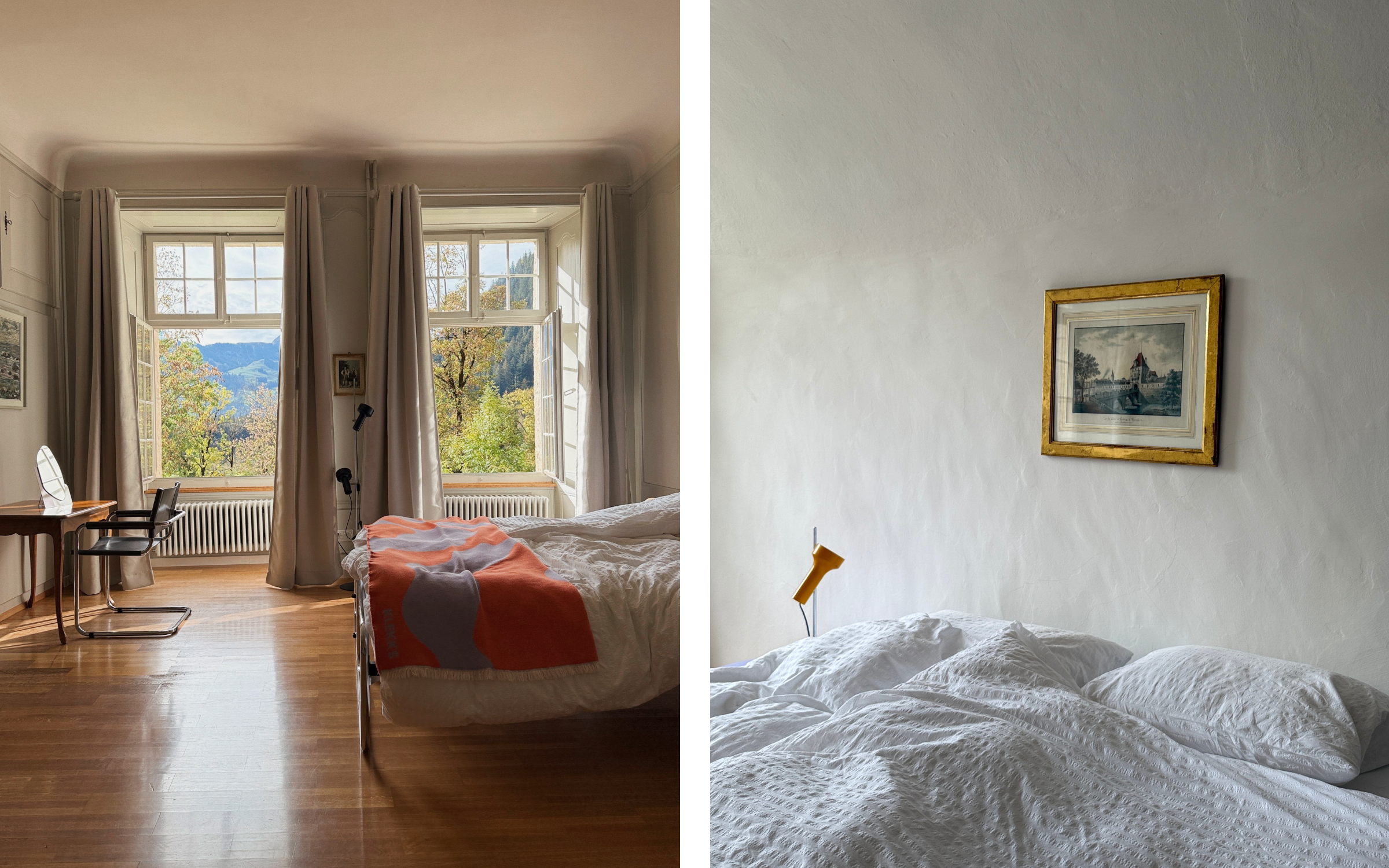
Making It Their Own
There's a simplicity to the interiors at Schloss Blankenburg that feels both welcoming and tasteful.

The rooms are generously proportioned and filled with natural light, with just enough furniture to make them inviting without overwhelming the architecture. Vintage beds, contemporary lamps and colourful details introduce a playful contrast to the historic surroundings.

There was never a rigid interior design concept. Much of the furniture had been collected over the years, while other pieces were sourced secondhand or already belonged to the castle. The decision to purchase as little new as possible was partly financial and ecological, but also reflected the couple's personal tastes.

As Anne-Sophie explains, they had been imagining a project like this for so long that many of the decisions came naturally. Rather than following a predetermined design concept, they brought together pieces they already owned, objects they liked and furniture that worked within the historic rooms.
“We wanted to create a place where we would like to come and where we can be who we are. We don't want to be something we're not.”
The result is a distinctive mix of old and new. Secondhand finds, furniture from previous projects and personal collections of books and music sit alongside centuries-old architectural features.The aim was never to recreate the castle's past through its furnishings. Instead, Anne-Sophie and Lukas have approached the rooms as spaces to be lived in, combining the building's history with their own ideas of comfort and design.The arrangement feels personal rather than prescribed. Nothing appears overly decorated, and the castle's original features are given plenty of space.The interiors will continue to evolve over time, with new pieces gradually finding their place. As Lukas explains, guests returning in a year's time might discover something different, even if the underlying idea remains the same.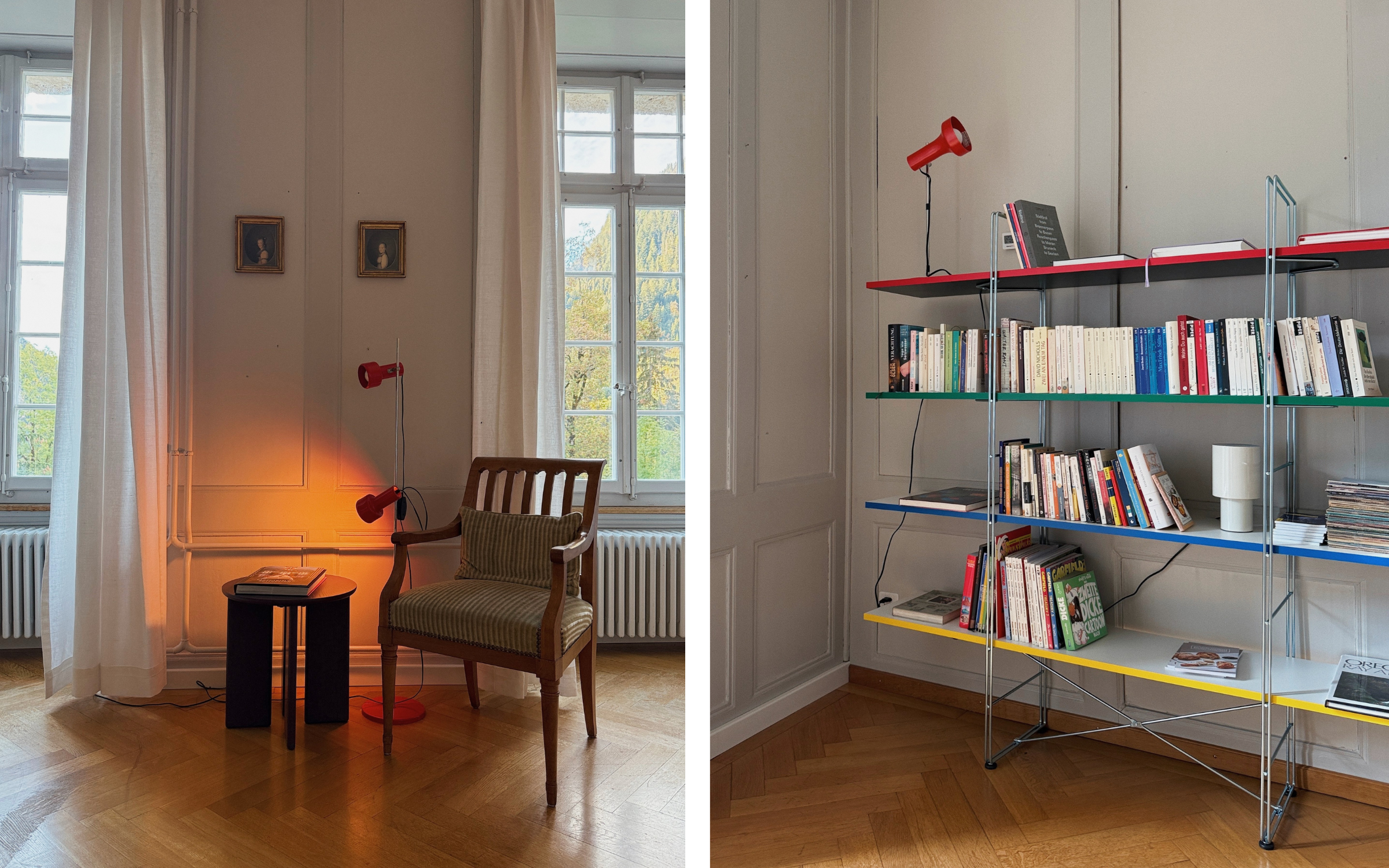
Hospitality on Their Terms
Beyond the architecture and interiors, what stands out to me is Anne-Sophie and Lukas's personal approach to hospitality.They bring years of professional experience to the project, but their vision for the castle is deliberately informal. They manage almost every aspect of the property themselves, from preparing rooms and welcoming guests to cooking, cleaning and administration.The work is demanding, but the freedom to do things their own way is central to what attracted them to the project.Anne-Sophie acknowledges that welcoming guests with an interest in design, food and distinctive places can create certain expectations. These are interests she and Lukas share, and they are very much reflected in the experience they've created. What matters to them, however, is that their choices remain personal rather than dictated by what they imagine guests might expect.“We just want to do what we like,” she explains. “It's a lot of work, so we might as well do it in a way that is enjoyable for us.”During our stay, that philosophy becomes particularly apparent around the dinner table.In the castle's main dining room, Anne-Sophie and Lukas have prepared a meal for their guests. The evening unfolds over food, wine and conversation around a large communal table.What surprises me most is how naturally everyone comes together. There's something about the atmosphere that feels less like a hotel and more like spending an evening at a friend's home, surrounded by people you've only just met but immediately feel comfortable with.It's an experience that reflects the kind of guests the couple had hoped to welcome.“We've been very lucky to have very easygoing, uncomplicated guests that honour the building and us as hosts,” Anne-Sophie explains.The castle has its own particularities, including shared bathrooms and the practical limitations of a protected historic building. Yet these are part of an experience that appeals to guests who appreciate its character and the personal approach behind it.Anne-Sophie describes the pleasure of discovering unexpected places while travelling, where the atmosphere, people and experience come together to leave a lasting impression.“When we travel we always want to find these hidden places [...] where it might not all be perfect but you come and you go with a good feeling.”
That is precisely what she hopes to create at Schloss Blankenburg.Behind the informal atmosphere is years of professional experience. Good hospitality also means knowing how to read guests: recognising when someone enjoys conversation and shared experiences, or when they'd rather have some time to themselves.Their aim is to welcome people in a way that feels genuine and personal, while drawing on the experience they've gained throughout their careers.The following morning, I spend some time exploring the castle's reading corners and communal spaces, enjoying the morning light filtering through the old windows. It's the kind of place where I can easily imagine staying a few days longer.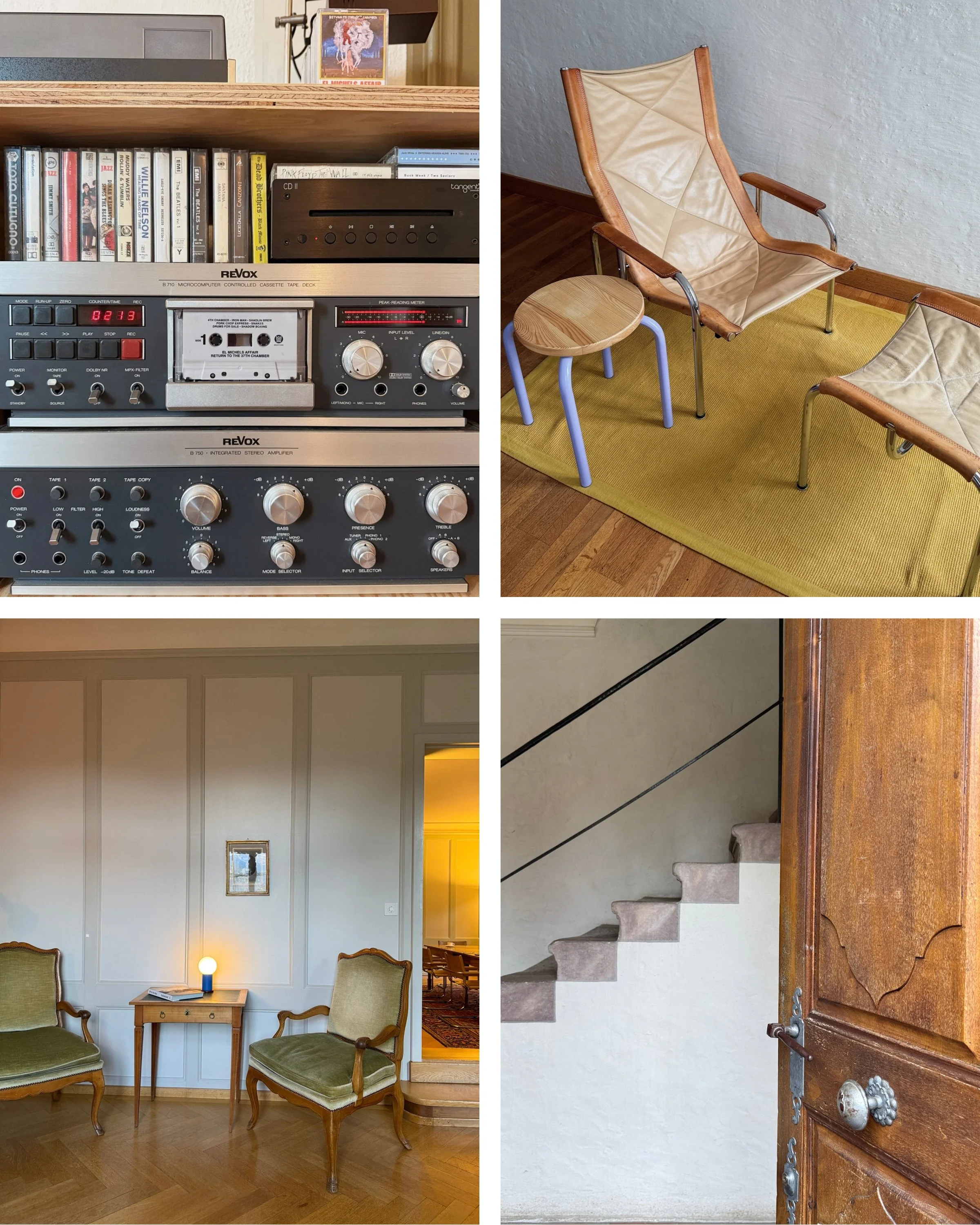
An Open Chapter
At the time of our visit, Schloss Blankenburg has been welcoming overnight guests for only a few months.The couple are still discovering what the project might become, and they seem in no particular hurry to define every aspect of its future.Once the daily operations have settled into a rhythm, they hope to explore opportunities for cultural activities, from intimate concerts and lectures to creative residencies and events involving the local community.For now, these remain possibilities rather than fixed plans.The idea is to allow the project to evolve naturally, without losing the personal character that makes it distinctive.This outlook also reflects a broader concern shared by the couple about the future of independent hospitality in the region. As older generations retire and properties change hands, maintaining smaller, individually run establishments can become increasingly difficult.For Anne-Sophie and Lukas, preserving buildings like Schloss Blankenburg also means finding ways for them to remain active, accessible and relevant to the people around them.During our conversation, I ask Lukas what he hopes guests will take away from their stay.He reflects on the places he has visited over the years, some of which remain vivid in his memory long after the trip itself, while others have faded surprisingly quickly.“I'd like to be one of those places that you remember,” he says. “And it can be that you don't even know exactly why.”Perhaps it's the architecture, the interiors, the music, the food or the people you meet along the way. More likely, it's a combination of all these things.Leaving Schloss Blankenburg, I can understand exactly what he means. And I'm already looking forward to discovering how the castle will have evolved by the time I return.Words & photography: The Archive